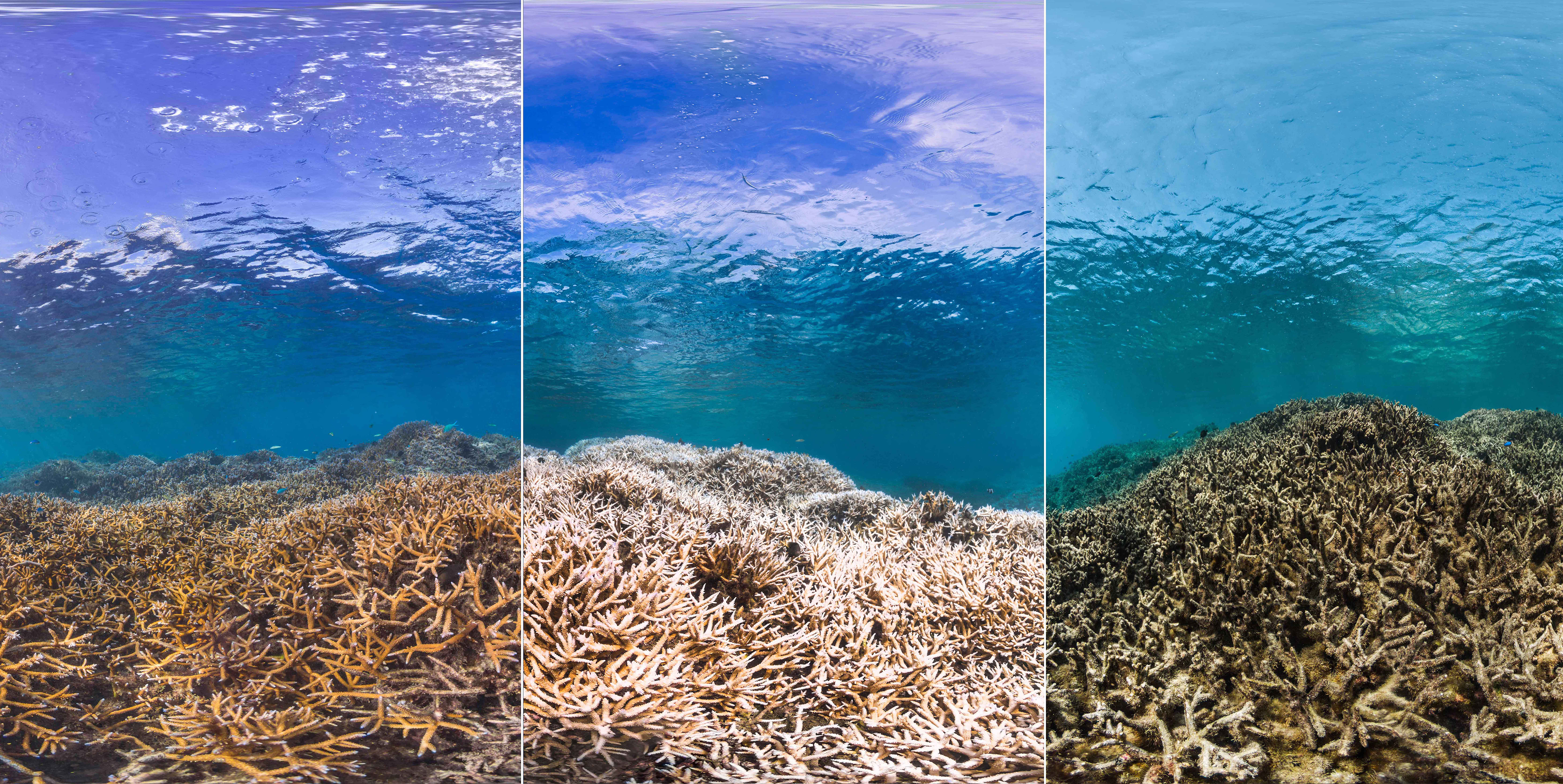
What drives global taxonomic homogenization in deep time?
When do marine communities worldwide start looking alike? This study tracked interval-by-interval shifts in how similar ocean communities were to one another across the entire Phanerozoic. Only two intervals produced genuine global homogenization: the end-Permian and the first pulse of the Late Ordovician mass extinctions. Both combined severe taxonomic loss with intense, sustained climate change. Neither extinction nor warming alone was enough. Now in review at Proceedings of the Royal Society B.
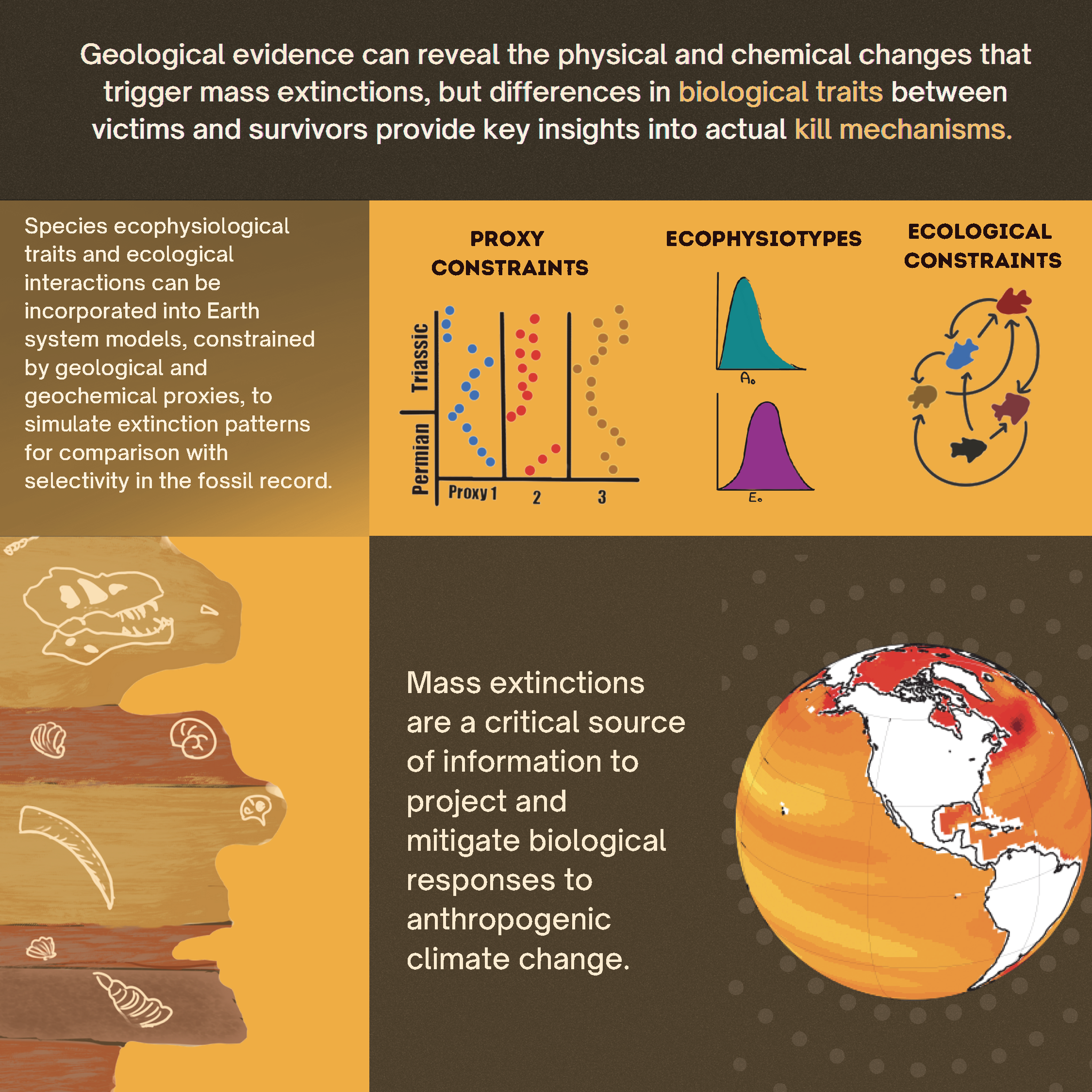
A graphical abstract I drew for Payne et al. 2023 (Cambridge Prisms: Extinction). The paper reviews what drives extinction selectivity during mass extinctions versus normal background times. Geographic range matters less during mass extinctions than usual, while physiological traits (respiratory and circulatory anatomy tied to tolerance of low oxygen, temperature swings, and pH shifts) show stronger selective signals. It also charts a path toward using Earth system models and physiological experiments to forecast future extinction patterns from past ones.
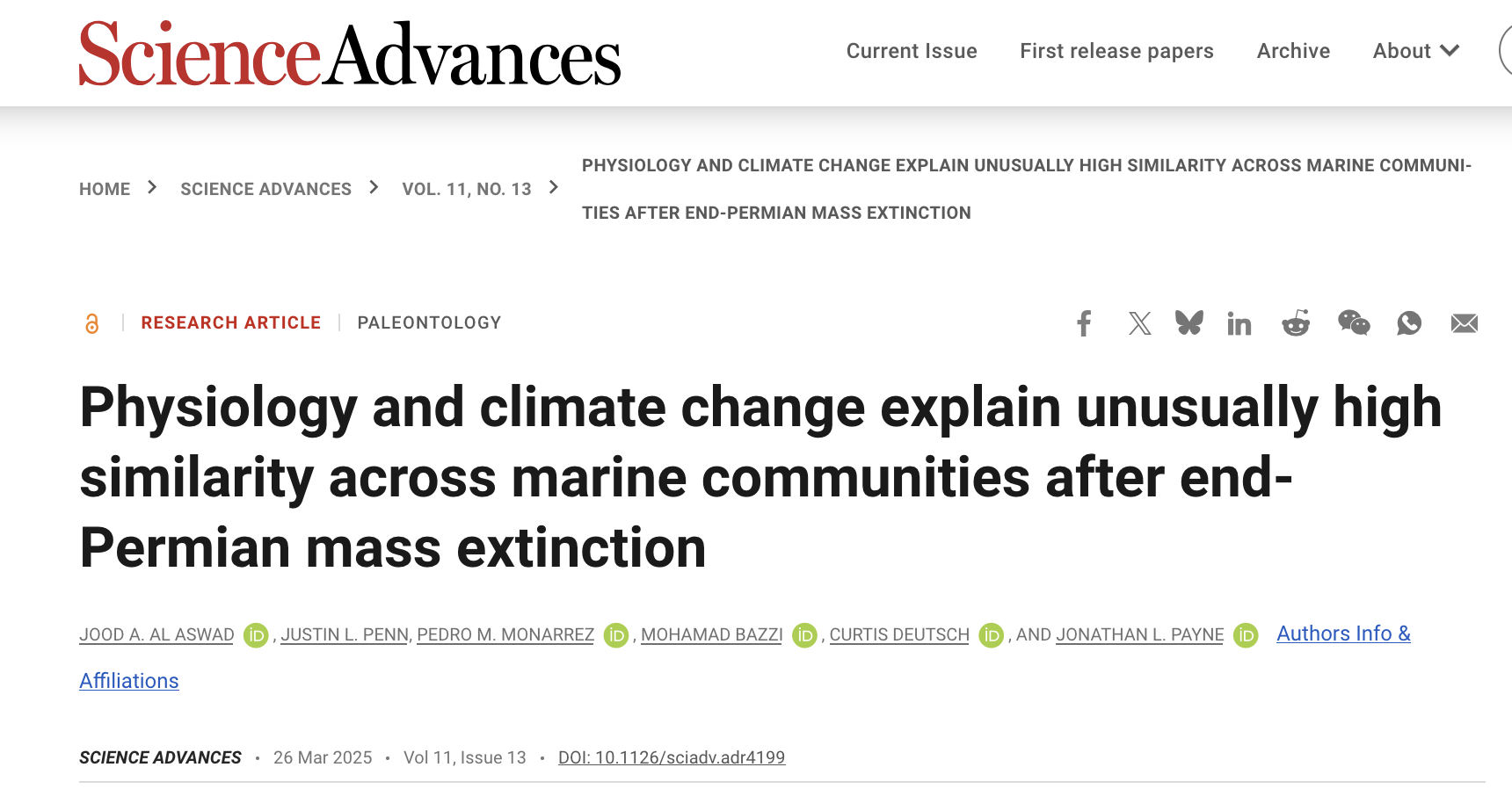
The Great Dulling: homogenization after Earth's worst mass extinction
After the largest mass extinction in Earth's history, marine ecosystems became strikingly similar worldwide, what we called "The Great Dulling" in Stanford Magazine. Organisms that could tolerate warmer, lower-oxygen oceans expanded globally, erasing the rich regional distinctiveness that had characterized pre-extinction communities.
I also spent a field season in Saudi Arabia collecting and systematically identifying bivalve fossils from directly after the extinction event, building one of the first primary datasets of this kind from the Arabian Peninsula.
Published in Science Advances, 2025. The paper demonstrates that end-Permian warming drove survivors with broad physiological tolerances to expand globally, producing the homogenized "Great Dulling" signature we see in the fossil record.
Using deep time as a baseline for the modern biodiversity crisis
My postdoctoral work bridges deep-time paleontology and conservation biology, using fossil records from past warm intervals to reconstruct what marine communities looked like before human impact. This baseline approach lets us separate what climate does to communities from what humans do, with direct implications for interpreting modern biodiversity change.
Details coming soon.
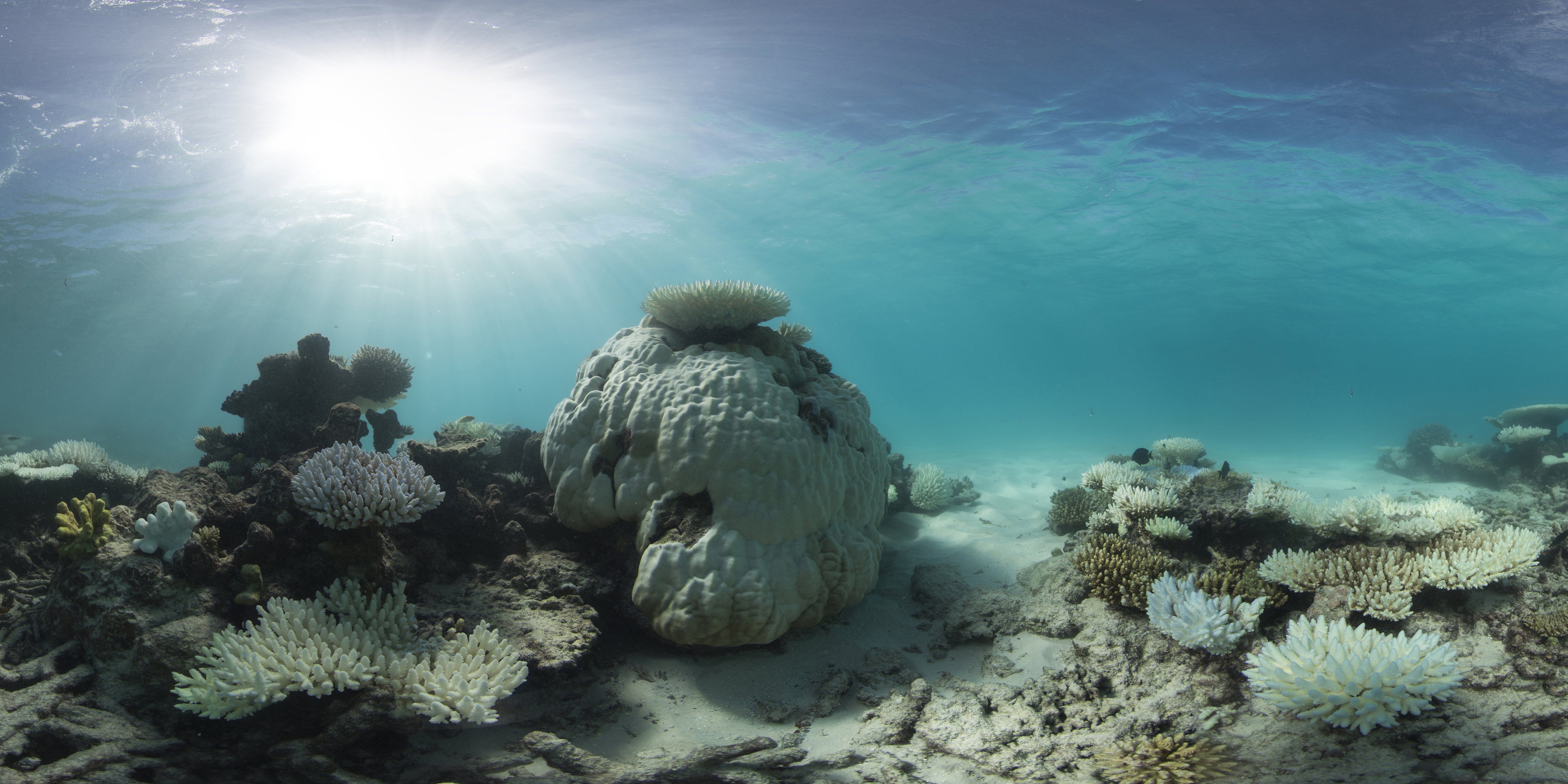
What deep time tells us about what comes next
By working across multiple temporal and spatial scales, I aim to understand how the traits that helped organisms survive past environmental change will help, or fail to help, them survive future ones. The fossil record is the only long-run experiment we have.
Details coming soon.